Before and After - What we can do for you...
Ceramic Crowns
Ceramic crowns can replace damaged teeth that still have their root. The biggest advantage of crowns and bridges is that they are almost indistinguishable from your natural teeth. They have very similar physical attributes as natural teeth (they expand in the heat and contract in the cold) and naturally transmit light. Ceramic material is also hypoallergenic and, compared to crowns with a metal core, they do not oxidize or emit any substances. Modern technology now being used ensures the ceramic material is strong.


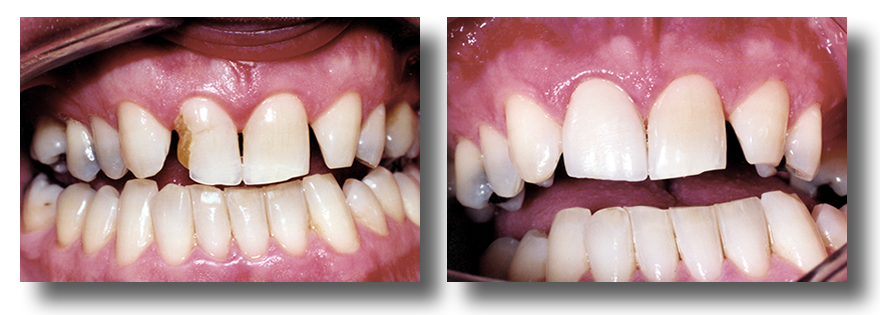
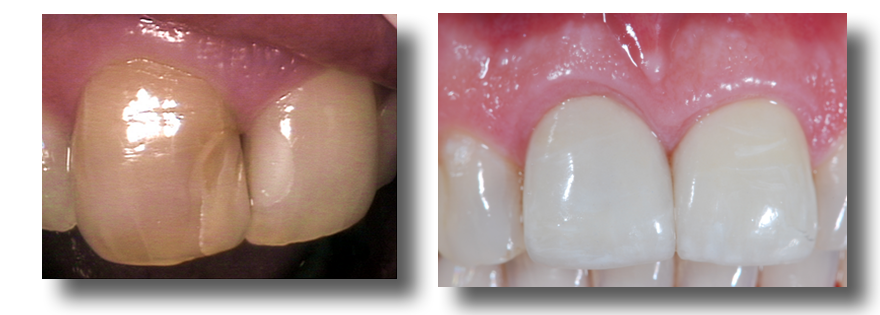
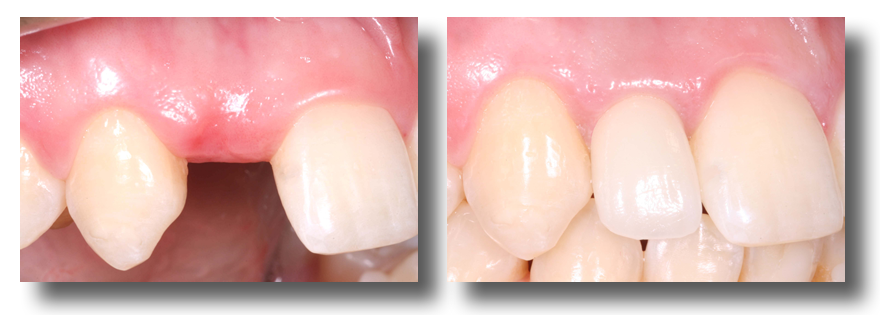
 In 2009, the central incisor #9 (her right front tooth in our photo) had an old crown on it that had a fracture in the porcelain and the shade did not match her natural teeth. We replaced it with a new ceramic crown that matched and blended better with her smile. This patient was ecstatic with the result.
Bridges
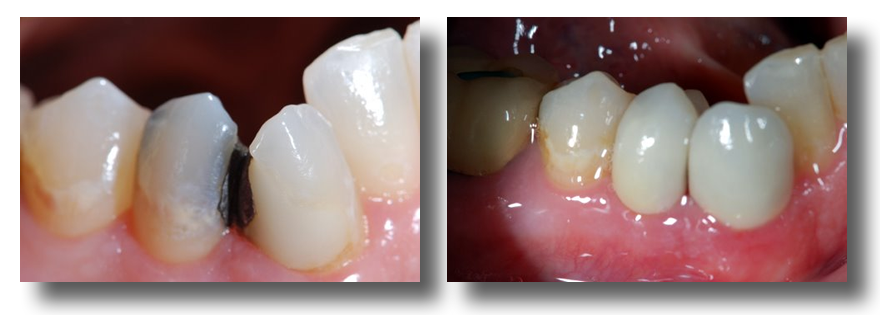
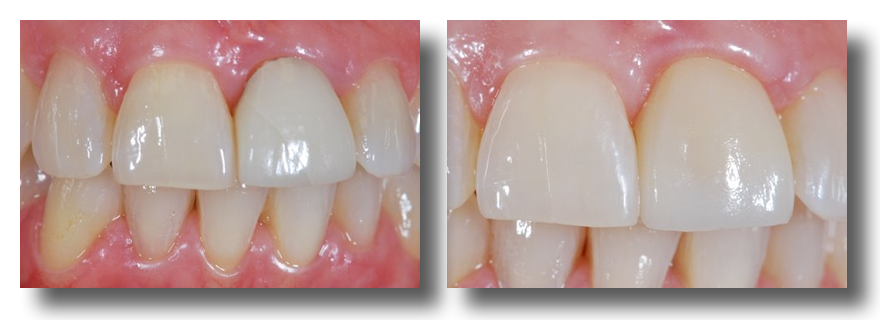
Ceramic bridges serve as a substitution for totally missing teeth. The biggest advantage of crowns and bridges is that they are almost indistinguishable from your natural teeth. They have very similar physical attributes as natural teeth (they expand in the heat and contract in the cold) and naturally transmit light. Ceramic material is also hypoallergenic and, compared to crowns with a metal core, they do not oxidize or emit any substances. Modern technology now being used ensures the ceramic material is strong.
Implants
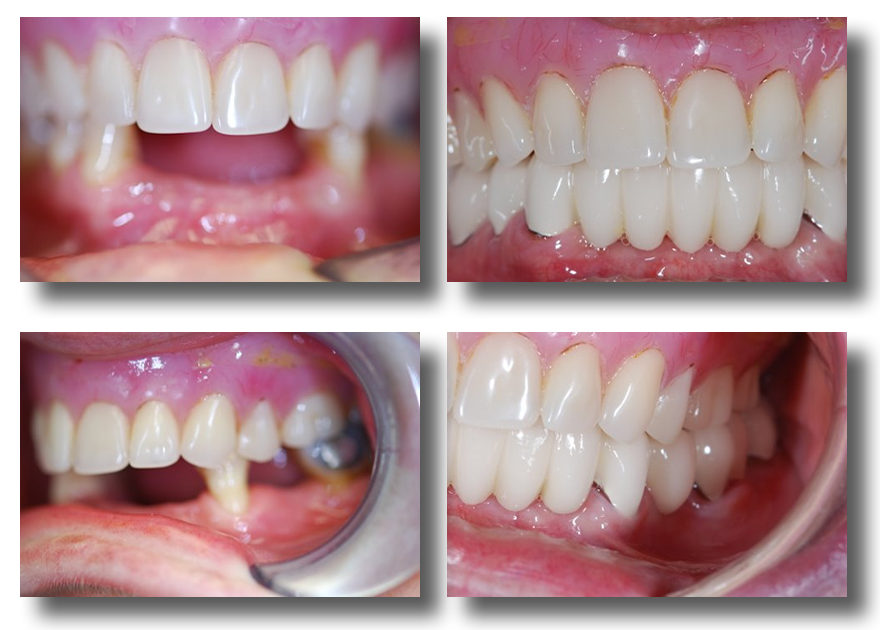
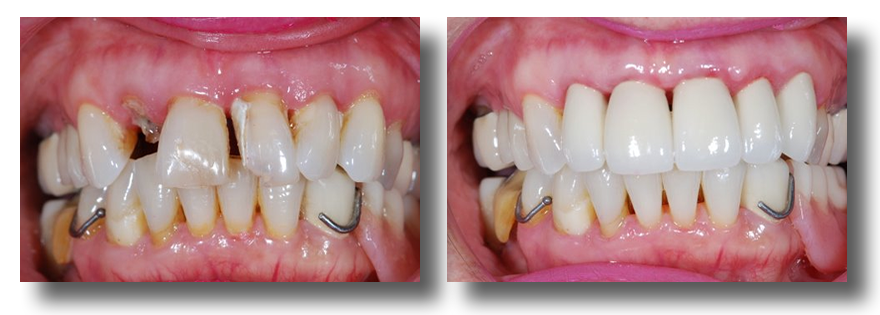
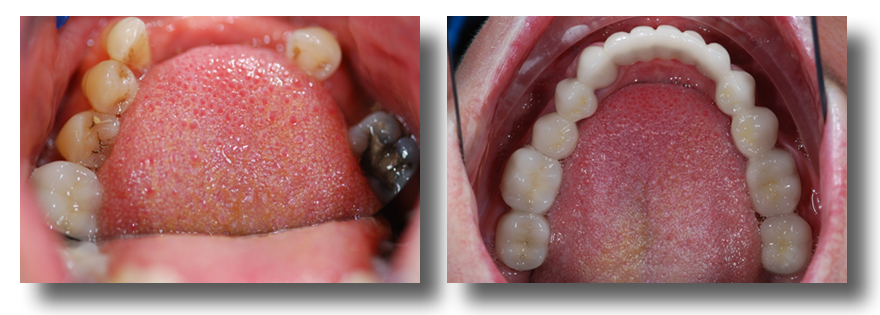
Although you have a number of restorative options for the treatment of missing teeth, none have proven to be as functionally effective and durable as implants. In many cases, dental implants may be the only logical choice for the restoration of all necessary functionality of the teeth and supporting structures.
Veneers
Veneers are thin custom-made shells designed to cover the front side of teeth. Made of tooth-colored materials, veneers are used to treat spaces between teeth and teeth that are chipped or worn, permanently stained, poorly shaped or slightly crooked.
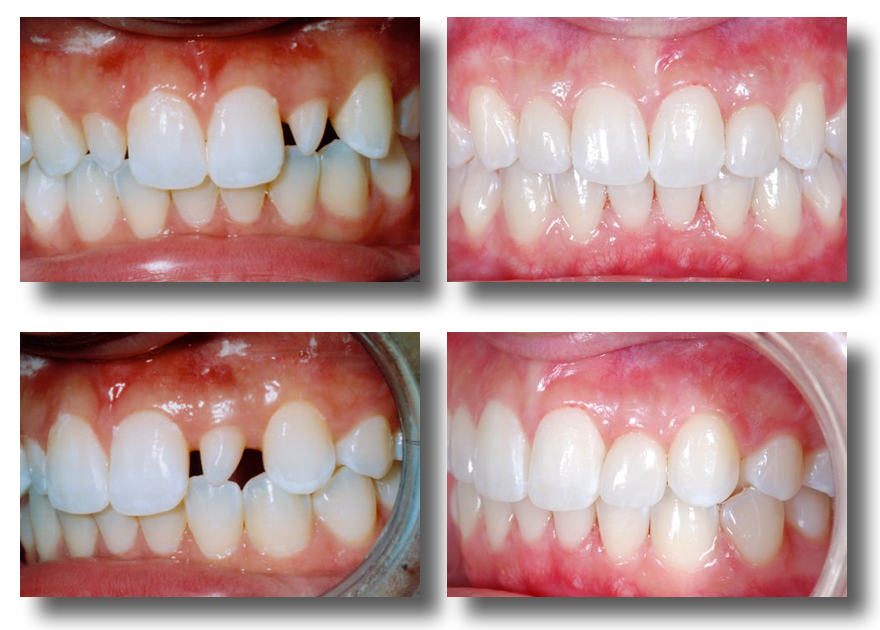
 This patient had small upper lateral incisors on the right and left that we bonded porcelain veneers over to give her a more cosmetic smile. The result is both natural and healthy.